Reflections on the IPWEA NSW & ACT State Conference 2026
Jocelyn Do
IPWEA NSW & ACT State Conference 2026: Reflections from the JOCES Team
Future Ready Infrastructure and what it means for civil engineers, councils, and the people doing the work
It has been just over two weeks since the IPWEA NSW & ACT State Conference 2026 wrapped up, and the dust has settled enough to put down some honest reflections on what was, by most measures, a worthwhile three days.
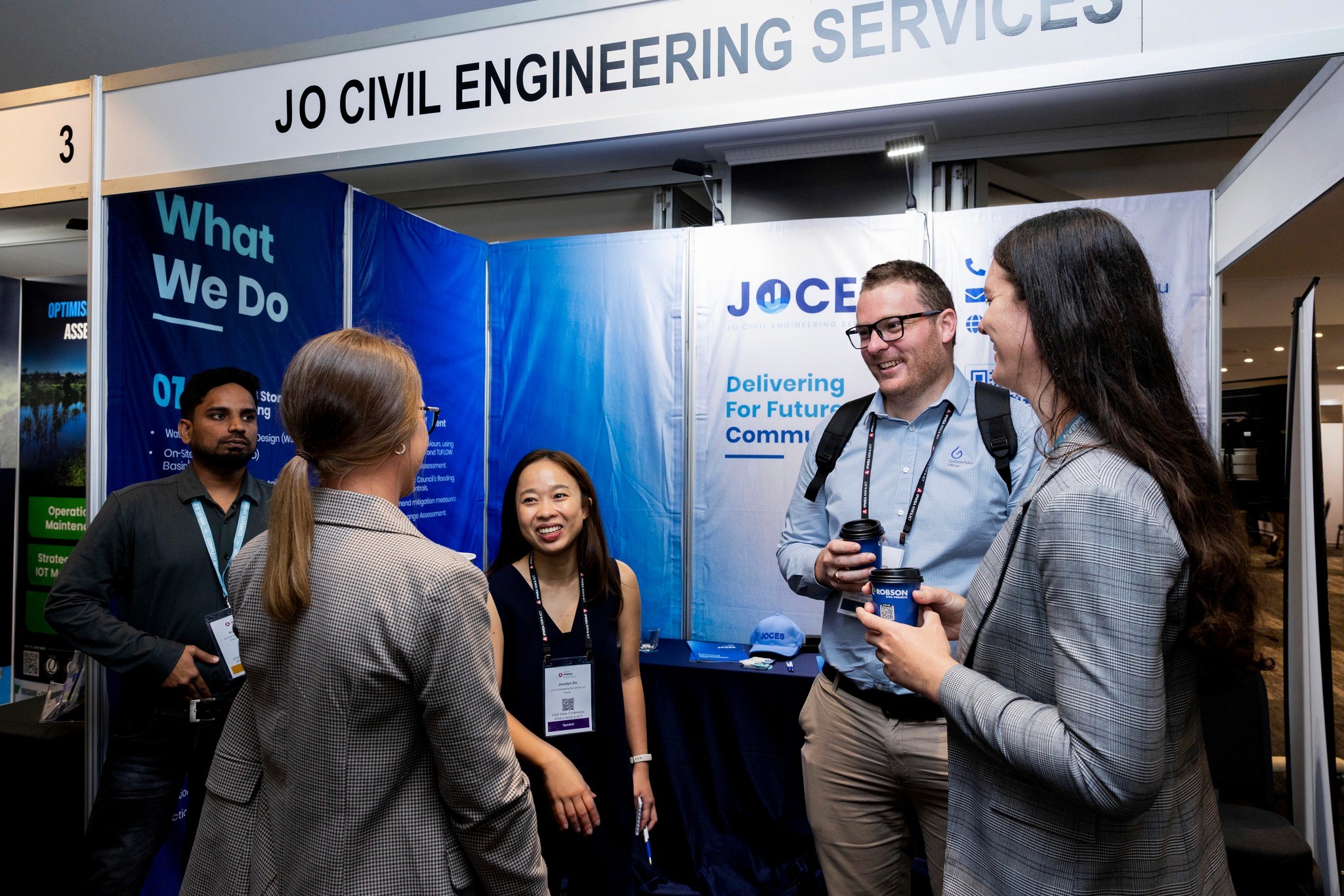
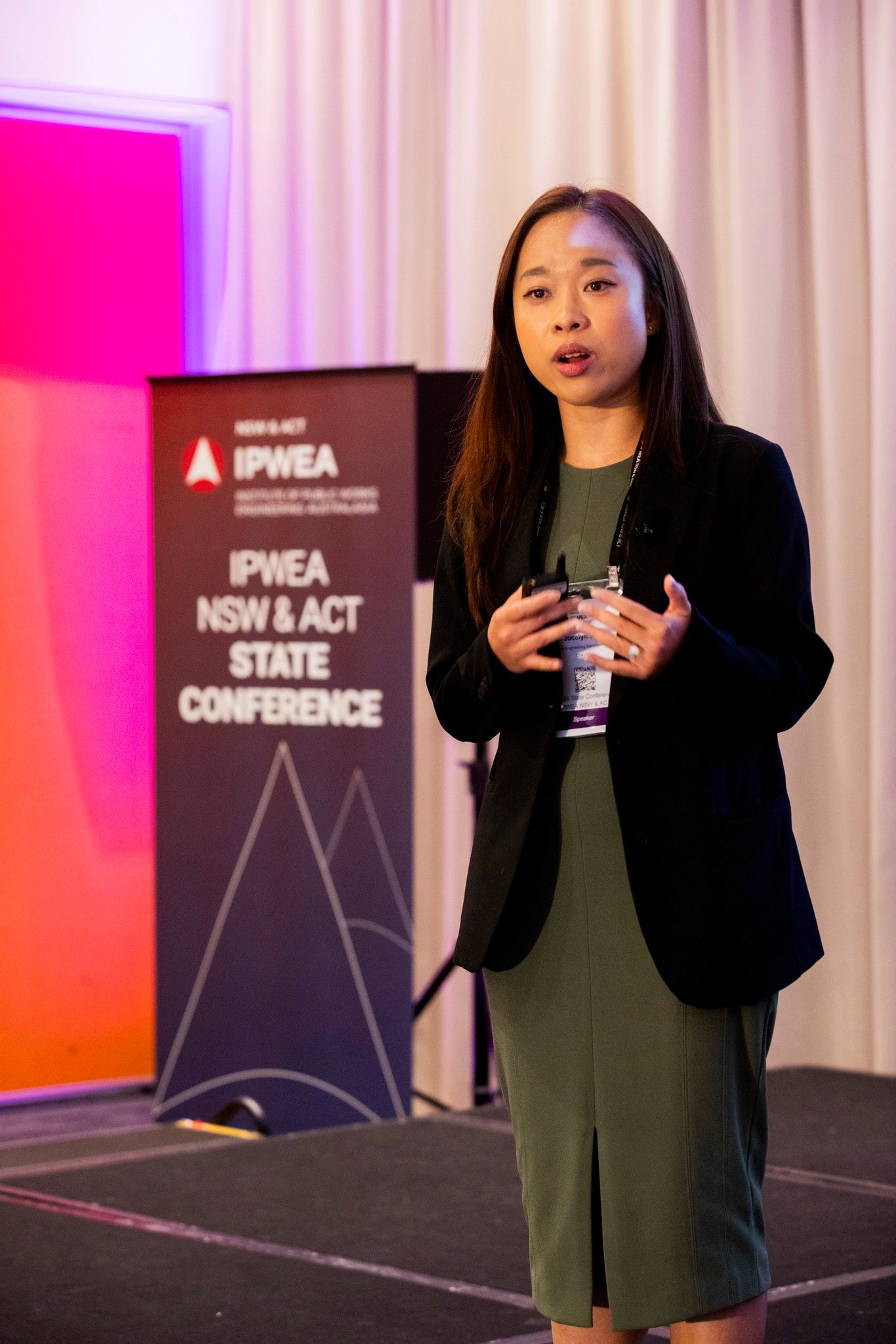
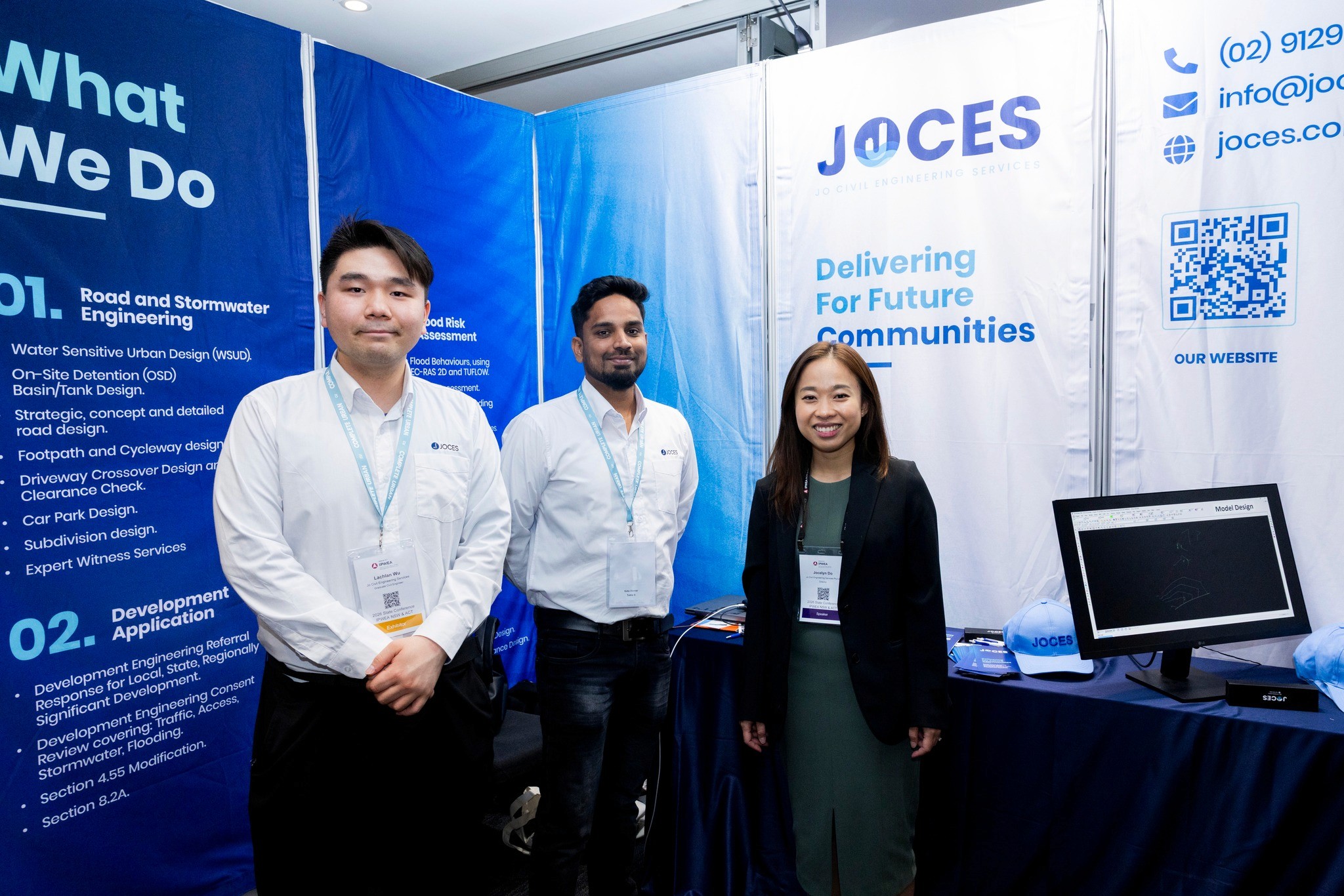
JOCES was at Booth 4, right opposite the conference rooms, for the full event, and Jocelyn Do had the privilege of presenting a stormwater masterclass on the program. This was our second year attending and our second as exhibitors. In the lead-up, the team prepared new company collateral including an updated brochure, a new promotional flyer, and a redesigned media wall, all debuting at the conference for the first time.
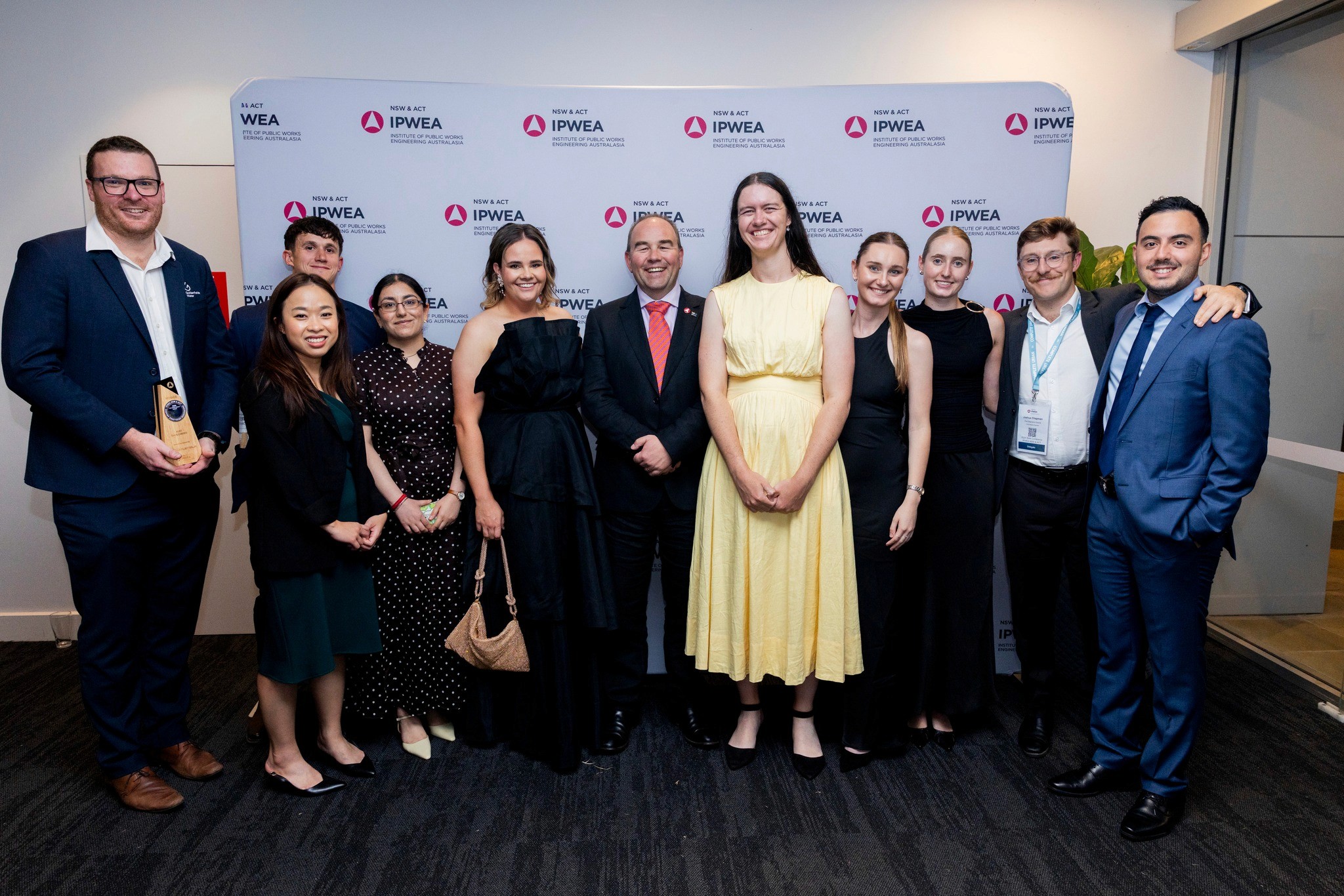
For graduate engineers Lachlan and Imran, it was their first industry conference. For Jocelyn Do, Director of JOCES, it marked a first in professional public speaking, presenting the stormwater masterclass to a room of infrastructure practitioners from across NSW and ACT. Jocelyn also had the honour of presenting the IPWEA Excellence Awards across several project categories, recognising outstanding work delivered across the public works sector in NSW and ACT.
The conversations that happened at the booth, between sessions, over coffee, and at the gala gave a useful on-the-ground sense of where the public works sector in NSW and ACT actually sits right now. These are the reflections that stuck with us.
Engineering's Missing Voices
One of the conference keynotes that stayed with the team came from Rear Admiral Katherine Richards AM CSC, Chief Engineer at Engineers Australia. Her address drew attention to a concerning trend: female enrolment in advanced mathematics and STEM subjects has been declining in recent years, at a time when the profession can least afford to narrow its talent pipeline.
Rear Admiral Richards spoke to the importance of mathematics as a foundation for engineering, and the need to actively shape environments that encourage women into STEM pathways. She noted that progress has been made in biology and chemistry-related fields, and made the case that the same shift in perception is both possible and necessary for engineering. The point landed clearly in a room grappling with workforce shortages across the board: the profession's pipeline problem is not just about training and retention, but about who feels the door is open to them in the first place.
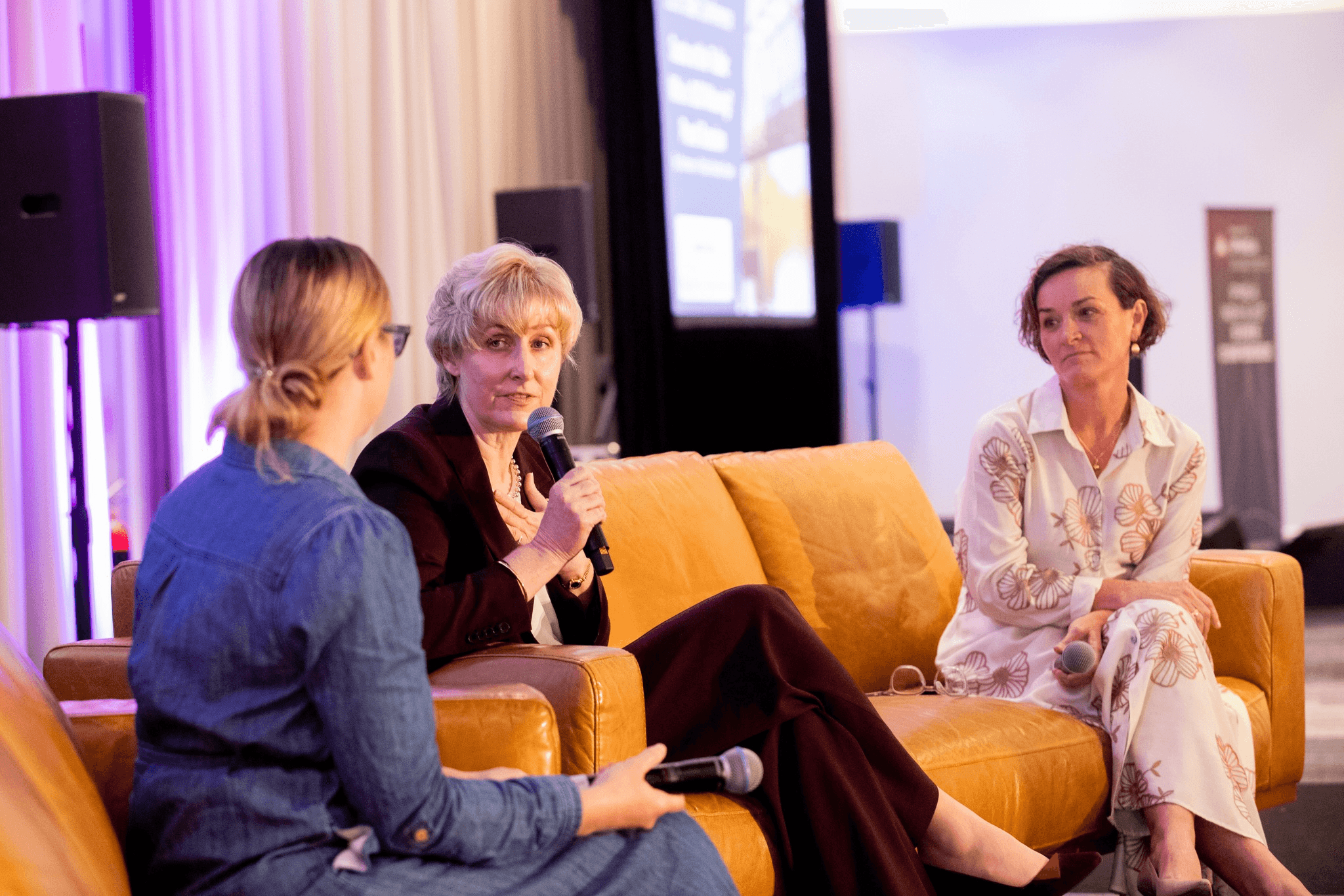
The session was followed by the Women in Public Works Panel, Seats at the Table: Who's Still Missing?, which continued the conversation with perspectives from practitioners across the sector.
Climate Change Has Moved from the Margins to the Centre of Infrastructure Design
The most noticeable shift compared to previous years was how climate change appeared throughout the program. It wasn’t confined to a single track or a token panel session. It threaded through stormwater, asset management, road infrastructure, disaster recovery, and even procurement discussions.
The transition from ARR 2019 v4.1 to v4.2 came up in several conversations, particularly around what the move to IPCC AR6 and SSP-based scenarios actually means for DA-level assessments. The engineering community is still working through this, and so are councils. There is no settled position yet on which scenario to default to, how to handle spatially variable rainfall factors in routine assessments, or how to communicate the implications to applicants and decision-makers without overwhelming them.
What was clear is that the question is no longer whether to incorporate climate change into design. It is how to do so in a way that is consistent, defensible, and proportionate to the project at hand. That is a question the industry, including stormwater and flood engineers across NSW, will be working on for some time.
The Technology Is Arriving Faster Than the Workforce Can Keep Up
Several sessions covered AI applications, digital twins, asset management maturity, and data-driven decision-making. The technology on display was genuinely impressive: defect detection from imagery, automated condition assessment, predictive maintenance. These are no longer concepts. They are available products with real case studies behind them.
The honest gap, which came through clearly in audience questions and side conversations, is workforce capability. Councils don't yet have the people, processes, training pathways, or in many cases the budgets to operationalise much of what is available. The risk is a widening gap between what is technically possible and what is actually being used in day-to-day asset management and infrastructure delivery.
There is no quick fix to this. It is a workforce, training, and procurement challenge as much as a technology challenge. But it was good to see the issue being named openly rather than glossed over in the enthusiasm for the tools themselves.
Development Engineering in NSW Is Having a Moment
It was encouraging to see strong attention given to the development engineer's role, the responsibilities, the pathways, and the capability gaps. This isn't a glamorous part of public works, but it is foundational. Every approved subdivision, every new road, every piece of stormwater infrastructure brought into a Council's network passes through development engineering at some point.
The recruitment and retention challenge in this space is well known. What was useful was the open discussion about what the role actually involves day-to-day, what good looks like, and how Councils can support the people doing the work. The IPWEA framework on roles and responsibilities of the development engineer is worth the time of anyone working in or alongside this function.
The Value of Being in the Room
One thing that doesn't always come through in the formal program, but is arguably the real reason these conferences matter, is the quality of the unstructured conversations. The chats between sessions. The questions that come at the booth after someone has been thinking about something for a few days. The phone numbers exchanged at the gala dinner.
Some of the most useful conversations at Booth 4 had nothing to do with anything on the program. They were about specific projects, specific stuck-points, specific frustrations: a council engineer working through a complex overland flow issue, a consultant trying to interpret a new DCP requirement, a developer wondering why a particular consent condition keeps appearing.
The YIPWEA networking event added a lighter note to proceedings. Delegates were challenged to build a structure capable of holding the most weight, a task that sounds straightforward enough in theory. The JOCES entry was not among the top performers. It has since been filed under lessons learnt.
These conversations and experiences don't make it into post-conference reports. But they are how the profession progresses, slowly, in person, one shared problem at a time.
What JOCES Took Away
It would be incomplete not to share a few honest observations from our side of the booth.
The masterclass was a worthwhile experience. Preparing technical content for a live audience forces you to sharpen your own thinking, and the questions afterwards were genuinely useful. We learned as much as we shared.
The conversations that mattered most weren't planned. The best ones started with someone walking up with a real problem they were stuck on. There is no substitute for being in the room when that happens.
Three days is a significant commitment. Pacing matters, and so does looking after the people working the booth. We didn't always get this right and will do better in Tweed.
A conference is only the start of the conversation. The harder work is staying in touch with the people you met once everyone is back at their desks and the inbox has caught up.
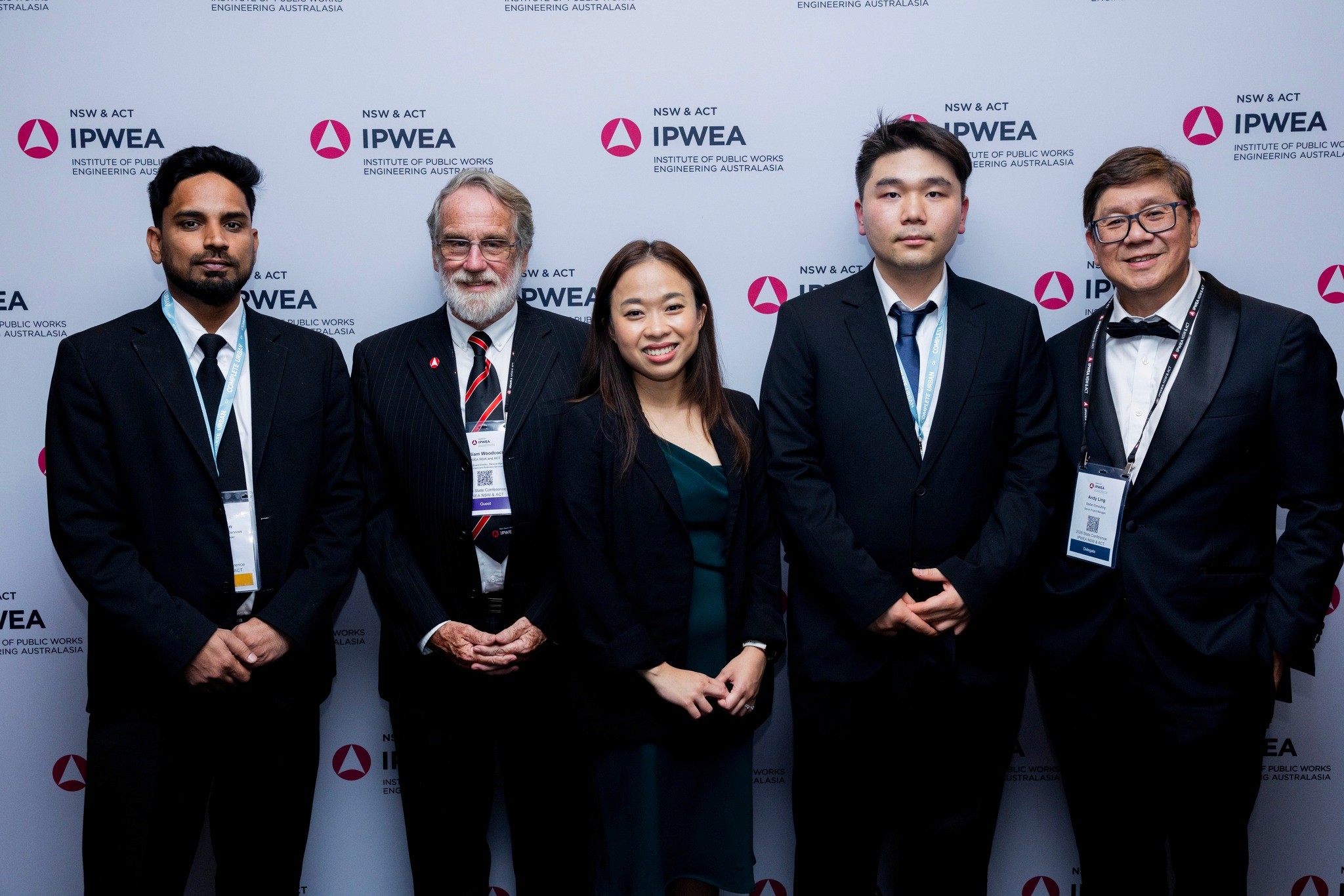
To the IPWEA NSW & ACT team, program organisers, the speakers who put in the work to share what they have learned, and the council and industry attendees who came past Booth 4 or stayed back for the masterclass, thank you. Conferences only work when people are willing to share openly, ask honest questions, and engage with each other beyond their immediate patch. That happened across these three days.
The sector is navigating a complex moment. Climate, workforce, funding, technology, community expectations. None of these are getting simpler. But the willingness across the room to share what is working, name what isn't, and learn from each other is what makes these few days genuinely worth the time away from the desk.
Looking forward to the next one in Tweed!
For those who didn't get the opportunity to connect at the conference, JOCES welcomes further conversation.
Need support with stormwater design, flood modelling, traffic engineering, or civil design? Contact JOCES today to discuss how we can support your next project.